Knowledge Card Creation: a Tokeny case study
Transform knowledge points into beautifully visualized cards ideal for review and sharing. Follow the recorded task, execution screenshots, actual files and verification notes.
By the Tokeny team · Windows · Tokeny 1.7.8 · gpt-6-sol
Prepare the inputs
Create a separate workspace in Tokeny, download and unpack the sample inputs, then select a model that supports tools. The sample uses synthetic data or the public sources named in the article.
- topics.txt
Send the task to Tokeny
The original task was executed in Chinese. Copying these instructions reproduces the same task; the results below include an English report.
把 6 个统计学概念做成中文知识卡片,包含定义、小例子和常见误区,输出可打印 HTML 与 6 张 SVG 卡片。

交付文件:cards.html、card-1.svg、card-2.svg、card-3.svg、card-4.svg、card-5.svg、card-6.svg。
验收要点:
- 六个概念齐全
- 例子可算且无错误
- 卡片可单独打开
这是使用合成演示输入或指定公开资料的真实操作案例。请先读取工作空间输入,再实际生成文件并自检。所有写入、脚本与临时服务限于当前工作空间;临时服务只监听 127.0.0.1,执行后关闭;不触达外部收件人、不发布、不付款、不更改系统设置,不调用子智能体。需要公开资料时可读取给定 URL。只启用完成任务必需的工具。另写 report.md(中文)和 report.en.md(英文),简洁、完整,包含输入、处理步骤、真实结果、检查方式和局限;失败或未验证部分如实记录,不能宣称成功。最终回复用中文列出产物、关键结果与待核实项。
排版检查:Word 主标题仅出现一次,标题为黑色且与后续正文或表格保持同页;Excel 表头和长文字不能被窄列截断,合理设置列宽、换行、行高;HTML 在 390px 视口不能整页横向溢出。报告没有固定字数要求,不要为字数反复改写。
Follow-up instructions after review (1)
独立浏览器查看实际下载的 SVG 发现严重截断:card-4.svg 的定义右侧被切掉,card-5.svg 的定义和常见误区超出右边界,card-6.svg 的常见误区被切掉。HTML 网页正常不代表各 SVG 正常。请逐张修复全部 6 张 SVG 的正文自动/手动换行与内容区域高度,保留定义、示例、误区的完整文字。使用 tspan 多行或适合 SVG 的布局,不依赖不存在的自动换行;每行在左右安全边距内,背景块随正文高度调整。逐一实际浏览器渲染检查 SVG,不能只检查 HTML,修正报告说明本次补修。
The recorded run used an isolated demonstration workspace. Review the commands and file paths before approving operations in your own workspace.
What actually ran
The task was submitted through the Tokeny input box. An online model read the inputs and executed tools. This run covers the local sample task and its actual files. Results and checks are recorded below.
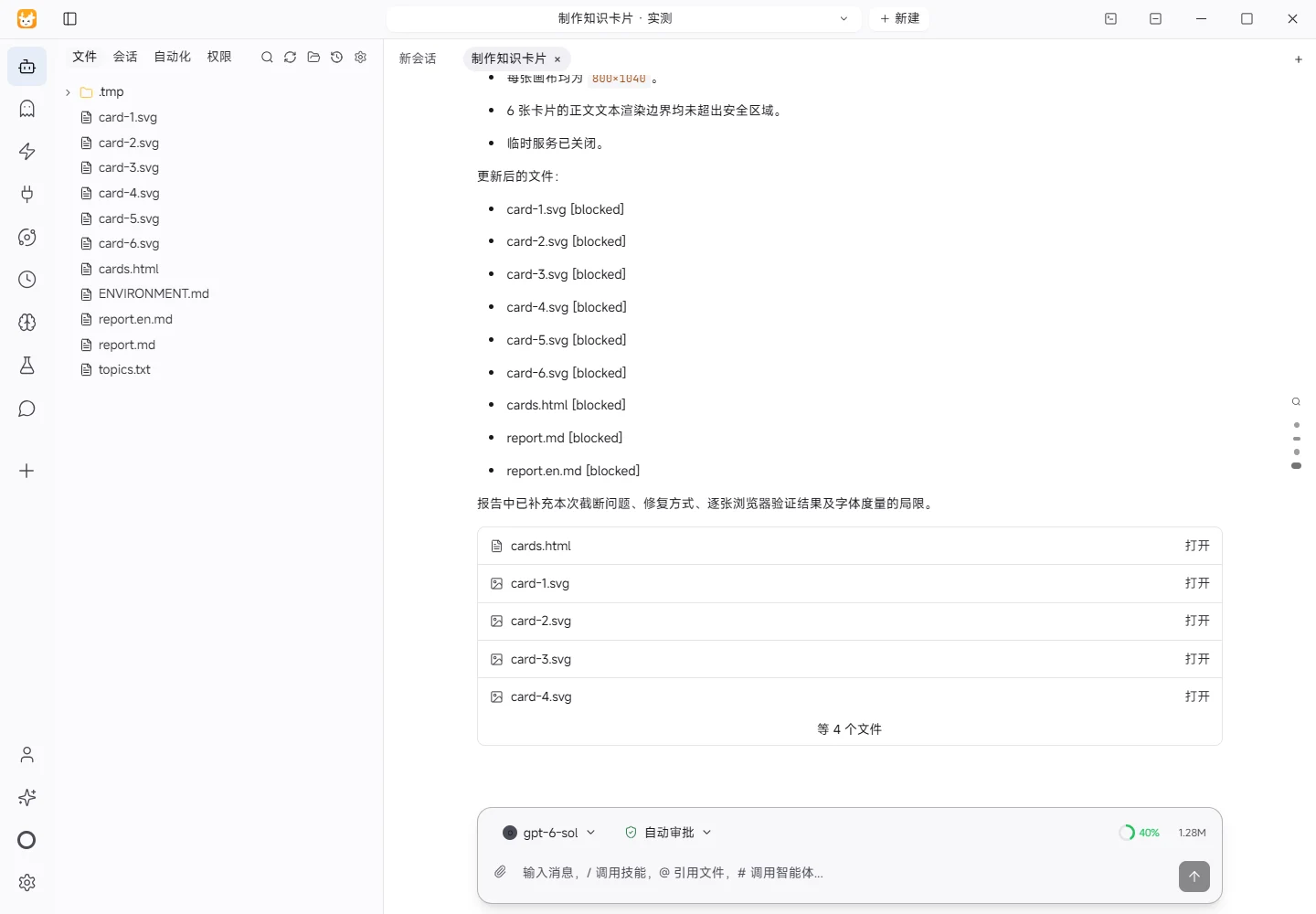
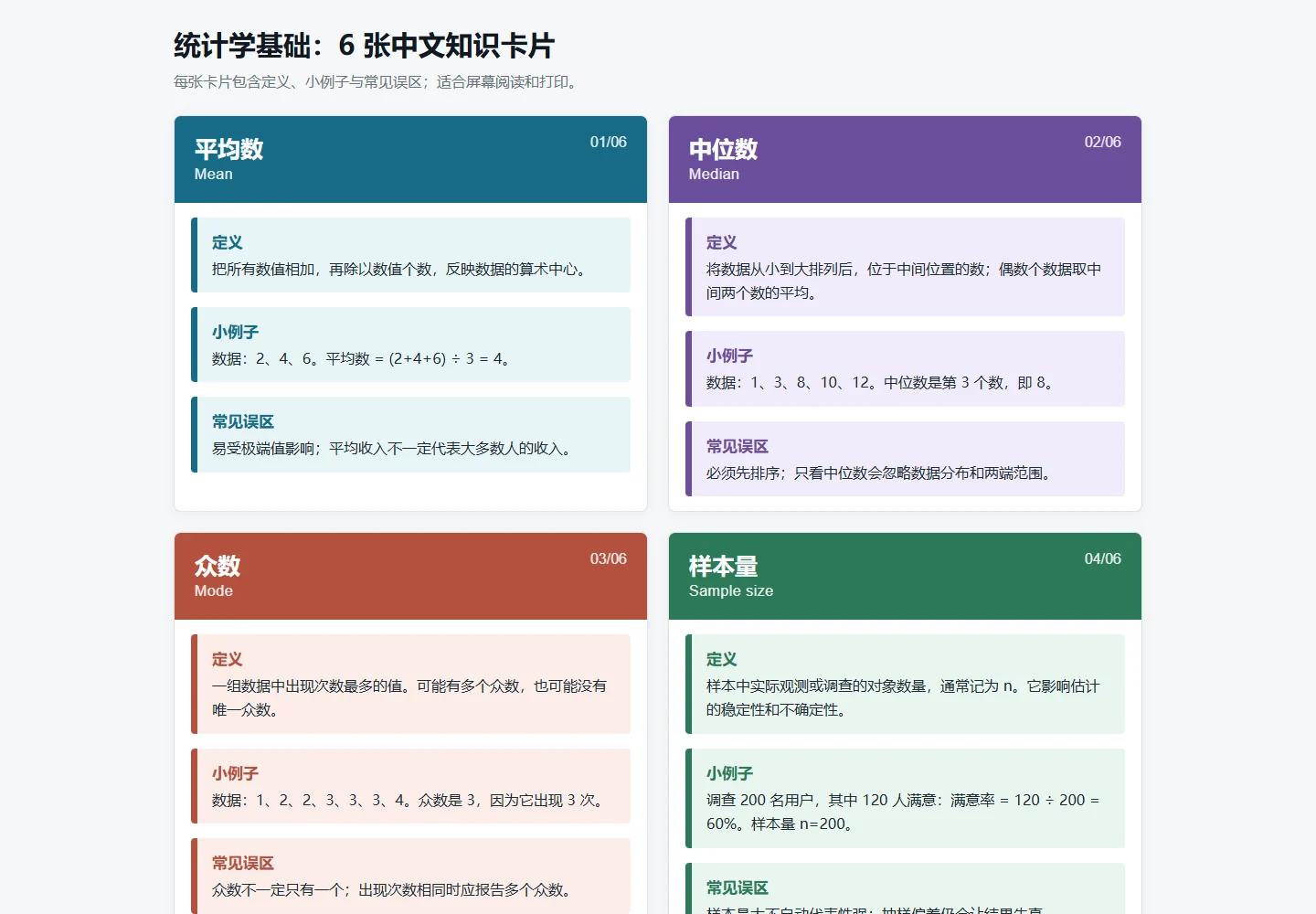
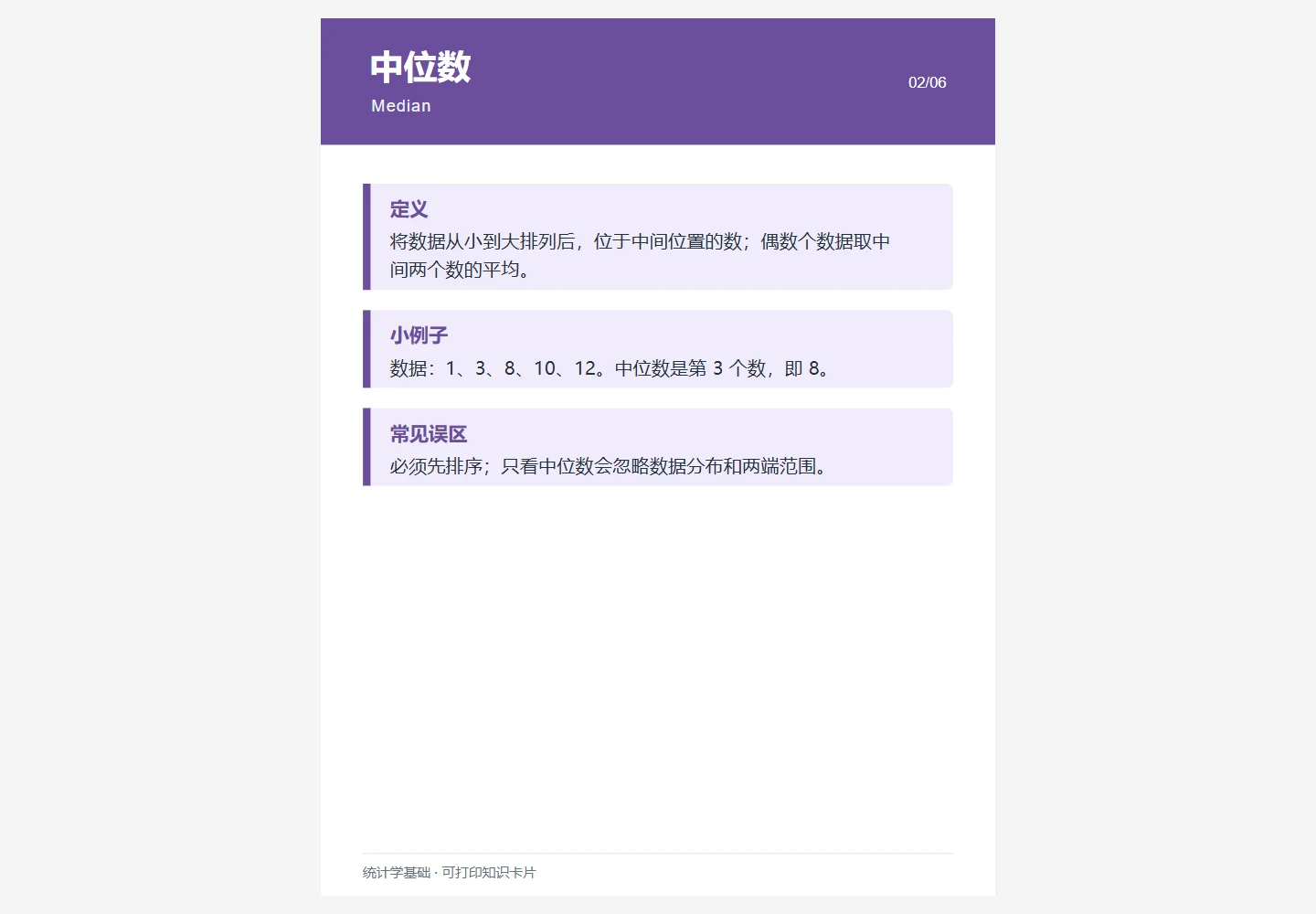
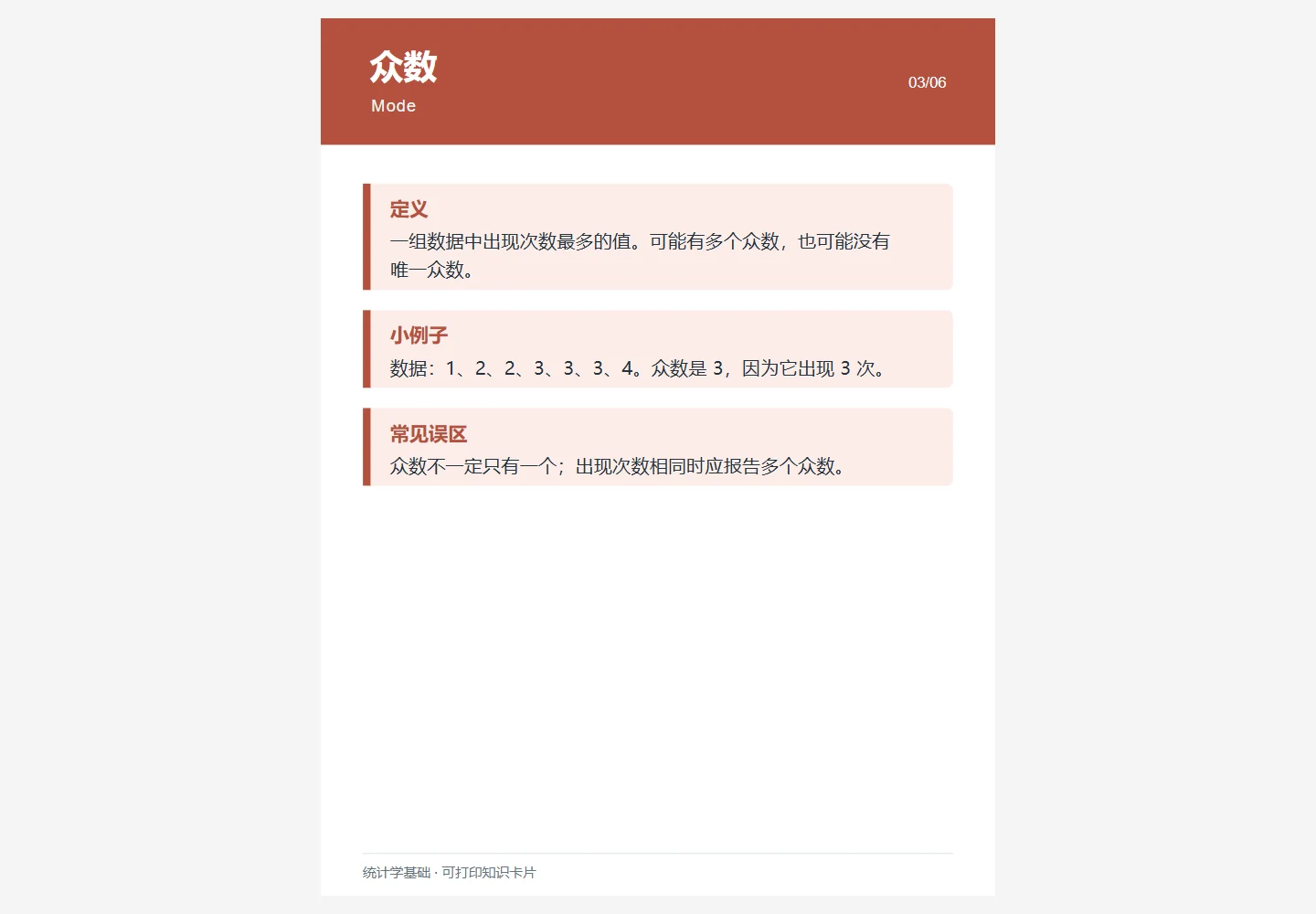
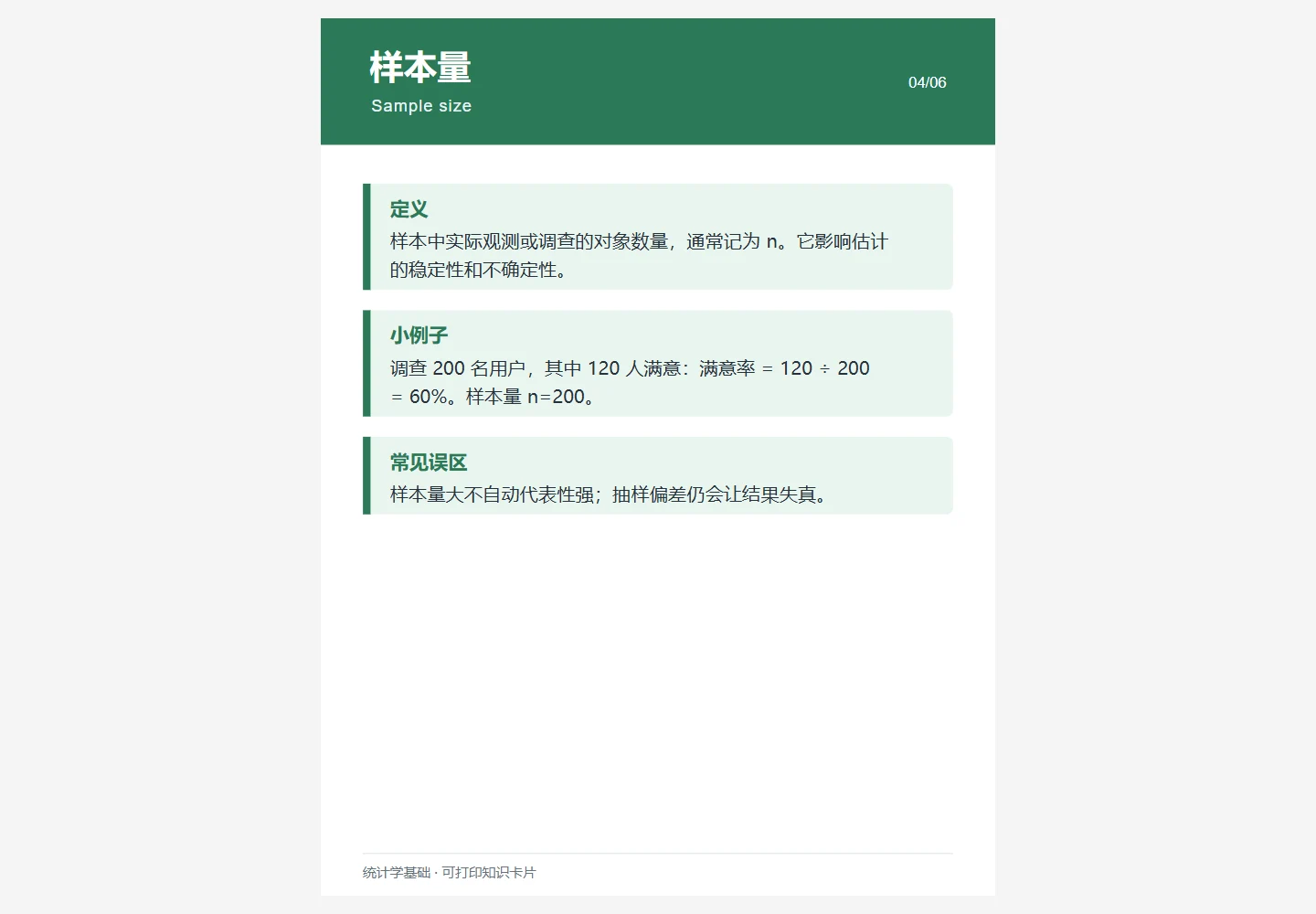
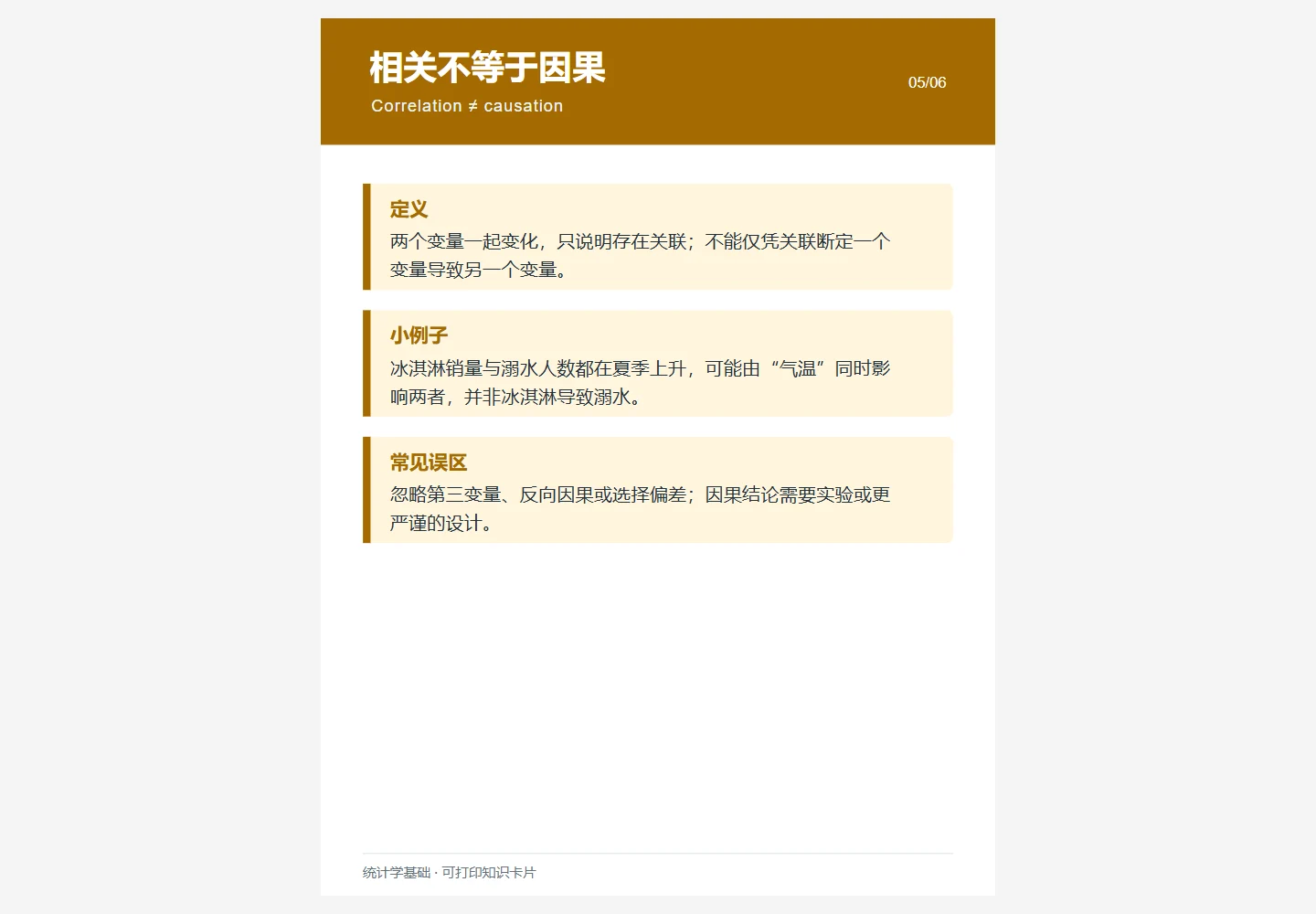
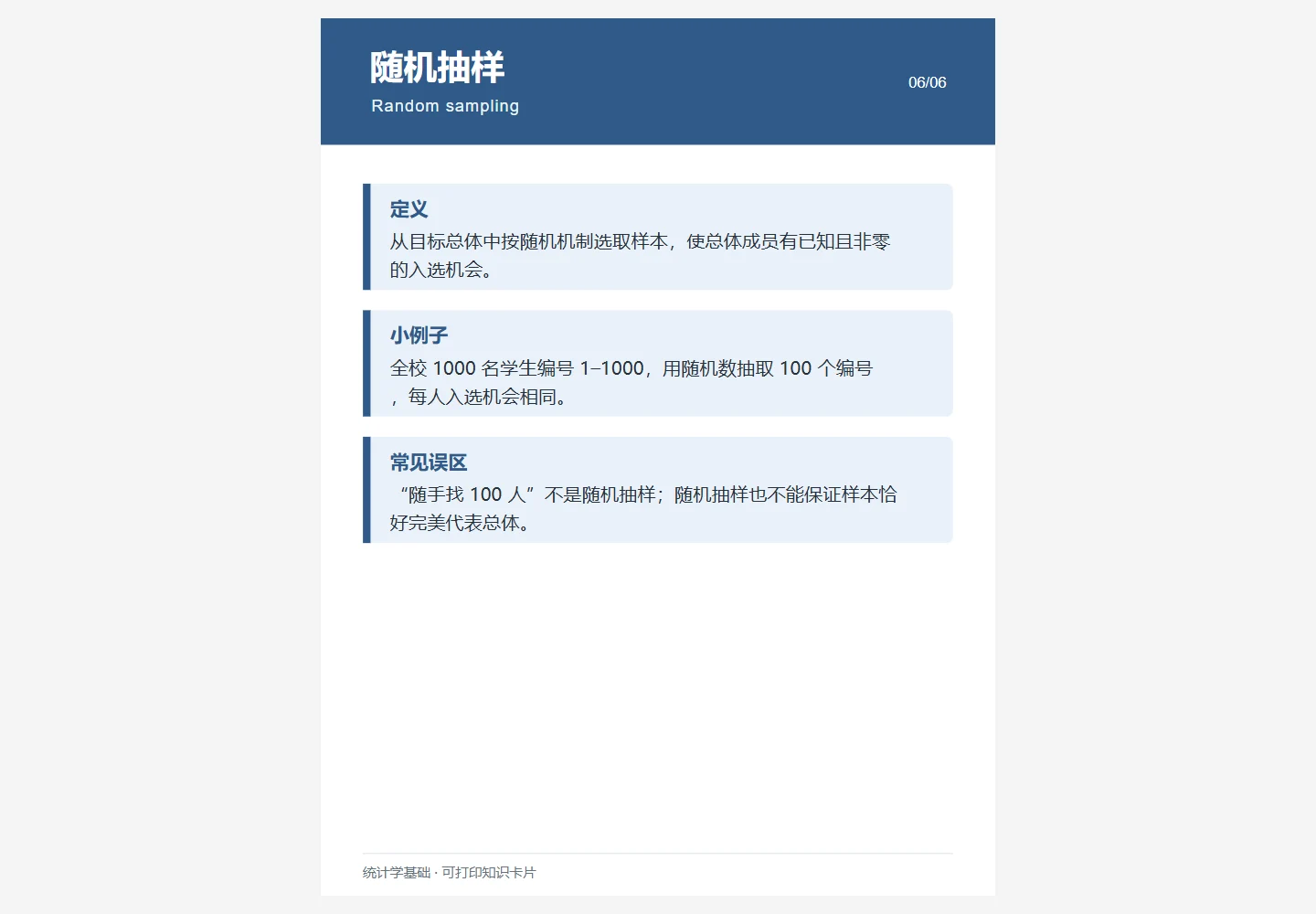
Results and verification
Input
- Read
topics.txtin the workspace. It specifies six concepts: mean, median, mode, sample size, correlation does not imply causation, and random sampling. - Read
ENVIRONMENT.mdto confirm the Windows demo directory, Chinese font availability, and browser verification conditions.
Processing
- Normalized each concept into three fields: definition, a small example, and a common pitfall.
- Initially generated the printable
cards.htmland six standalone SVG files. - After the browser feedback, rechecked the actual SVGs and confirmed the original issue: approximate character-count wrapping allowed some long lines to cross the right edge; a normal HTML page does not prove standalone SVG correctness.
- Regenerated all six SVGs with explicit width-aware line wrapping and multiline
<tspan>elements. Each body background block now grows with its line count, while all original text is retained inside safe margins.
Actual results
- Fixed and regenerated
card-1.svgthroughcard-6.svg; the HTML content remains complete. - All six concepts are present, with complete definitions, examples, and pitfalls.
- The examples are directly calculable: mean 4, median 8, satisfaction rate 60%, and 100 selected from 1000; the correlation example identifies temperature as a possible third variable.
Checks
- Text and structure checks: read the generated files and confirmed UTF-8, all six concepts, the three section labels, SVG roots, and multiline
<tspan>text. - Actual browser SVG checks: opened
card-1.svgthroughcard-6.svgindividually in Edge. Each rendered at 800×1040; rendered text bounding boxes were measured, and all six stayed within the horizontal safe area and the body-block vertical bounds. - HTML checks: at a 390px viewport,
scrollWidthmatched the 390px viewport width; all six SVGs loaded through the local static server with HTTP 200. - The temporary server listened only on
127.0.0.1and was closed after verification.
Limitations
- No physical printer was used, so printer-specific pagination, color, and margin behavior was not verified.
- SVG text relies on system font fallback; Chinese glyph metrics may vary across devices. The implementation uses conservative estimated-width wrapping, but the target environment should still be checked when exact typography matters.
- The examples are for introductory teaching and do not replace real sampling design, uncertainty analysis, or causal identification.
Download and inspect the outputs
The archive contains the files created during this run. Use these checks when adapting the example to your own data.
- Reconcile the reported results against the downloadable sample inputs.
- Open the generated files and check the contents relevant to your task.
- Review the limitations and any unverified steps in the report.